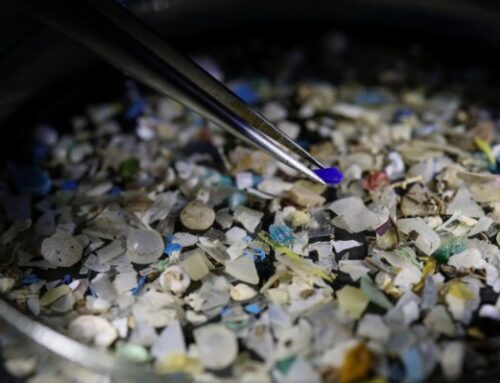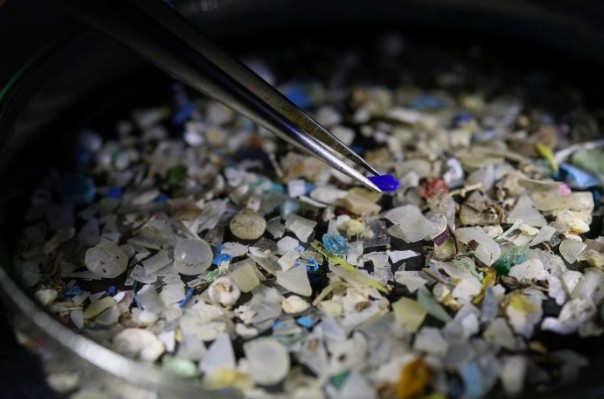
Research on photodynamic inactivation could be a way to get rid of pathogens in wastewater without the drawbacks of some current treatments, say scientists at the University of Wisconsin-Milwaukee, whose work is funded by the Department of Agriculture. Photodynamic inactivation uses ultraviolet light and porphyrin to eliminate bacteria, viruses and fungi, and initial results show a 90% to 99% reduction in bacteria within seconds.
|


UWM partners with USDA to improve wastewater treatment
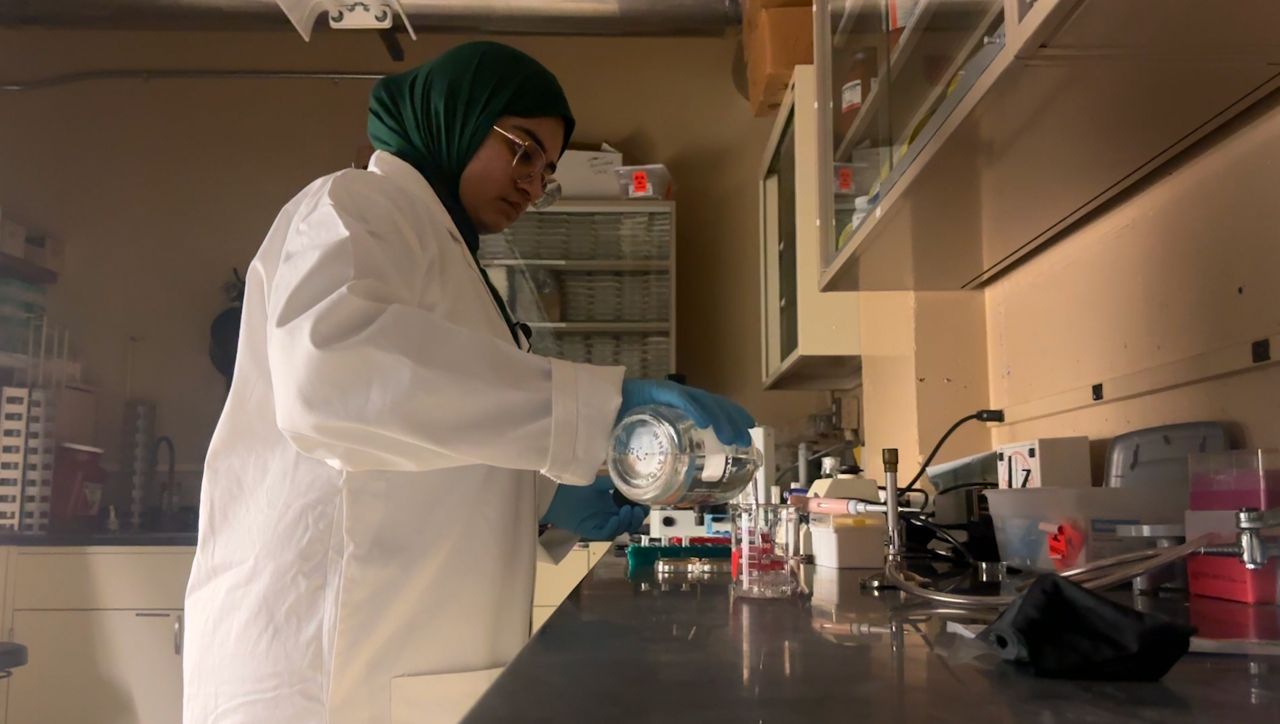
MILWAUKEE — The University of Wisconsin-Milwaukee is partnering with the U.S. Department of Agriculture (USDA) to come up with a more efficient way to clean wastewater. The goal is to help meet the rising demand for freshwater, which is a finite resource.
Current treatment options have drawbacks. For example, chlorine is inexpensive but creates harmful byproducts and doesn’t always get rid of viral bacteria.
The research at UWM, which is being funded by the USDA, is connected to the discovery that some bacteria found in wastewater are resistant to antibiotics. Scientists are trying to better understand why.
“We hear about the antibiotic resistance scare, so instead of using antibiotics, we can use different methods to kill the bacteria,” said Alia Ahmed, a member of the research team who is working toward a master’s degree in biomedical sciences.
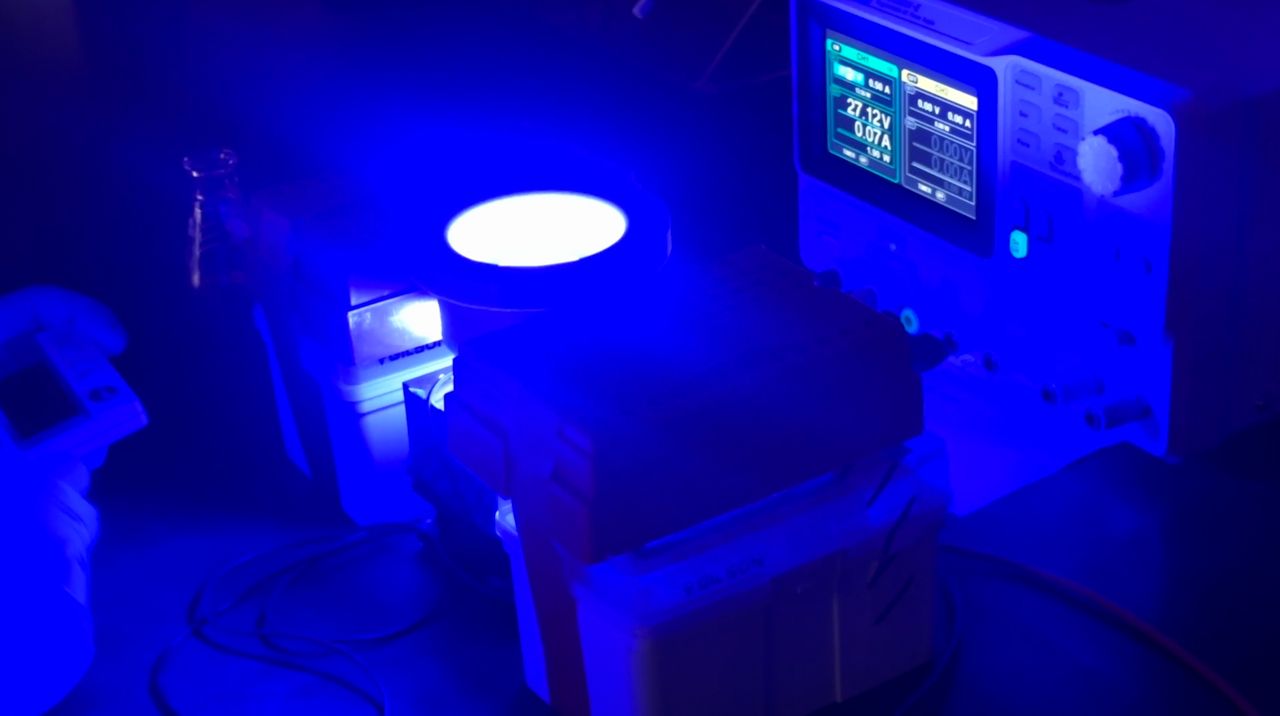
Spectrum News watched as Ahmed placed a wastewater sample in a petri dish. She was practicing a process called photodynamic inactivation (PDI). It uses UV light and a chemical dye called porphyrin to kill bacteria, viruses and fungi in the wastewater sample.
“When you shine a light on it, it gets excited, and when there is oxygen, free-floating oxygen, it reacts with that oxygen and produces reactive oxygen species, which can be damaging to the bacterial cell membrane,” said Ahmed.
Ahmed and her team are looking at whether this process could more efficiently get rid of harmful micro-organisms, so polluted water can be treated and re-used.
Professor Troy Skwor is leading this research and said the results so far are promising.
“You’re looking at a 90 to 99% removal of bacteria, and these were exposed for about five to 25 seconds only, and so it’s a very short amount of time and yet you’re still seeing a one to two log reduction in bacteria,” said Skwor.
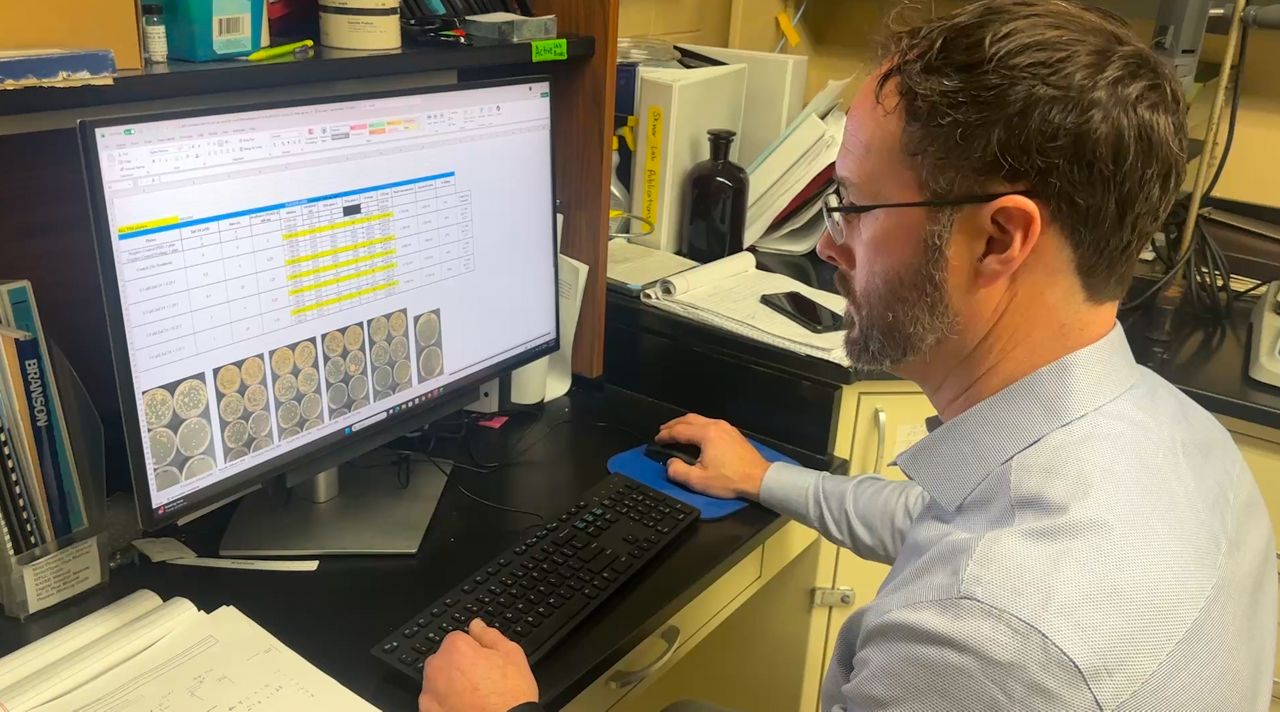
This study of wastewater treatment also goes one step further. Because the farming industry relies so heavily on fresh water, assistant professor Qingsu Cheng is working on a rapid test farmers could use to test if there are bacteria or pathogens in cleaned and recycled wastewater before they use it to water their fields.
“We do not want the greens and meats that we are going to consume to be contaminated,” said Cheng. “We need to make sure they are 100% safe for a citizen to consume.”
Scientists working on the project said they hope to gradually scale up the research to see if PDI can be used successfully to clean wastewater at large-scale water treatment facilities.