|


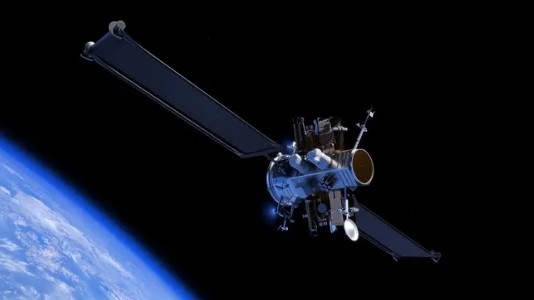
Jeff Bezos’ company has partnered with researchers at NASA’s Jet Propulsion Laboratory and the California Institute of Technology to study how to integrate Earth defense capabilities into its existing Blue Ring spacecraft platform. The concept is called the Near Earth Objects (NEO) Hunter mission, and it relies on multiple technologies to scan, deflect and divert incoming asteroids away from possible impacts with Earth.
It’s the latest application for Blue Ring, Blue Origin’s modular satellite bus built to support up to 8,800 pounds (4,000 kilograms) of mission payloads distributed between as many as 13 different connection ports. Blue Ring is designed to operate anywhere from low Earth and geostationary orbits to cislunar space, Mars and other deep-space destinations.
Across two separate mission phases, NEO Hunter will release a group of cubesats to rendezvous with and characterize a potential space object threat. Understanding as much as possible about an object’s composition, mass and density can inform which strategies can most successfully be deployed to ensure an altered trajectory.
One of those strategies can be carried out using NEO Hunter’s powerful ion beam emitter. The spacecraft will be capable of shooting a ray of charged particles onto an asteroid to change its orbit. Ion drive engines expel charged particles to propel a spacecraft, like the one used on NASA’s DART probe. Similarly, an ion beam can direct a concentrated stream of charged atoms with enough force to theoretically alter the heading of an object in space.
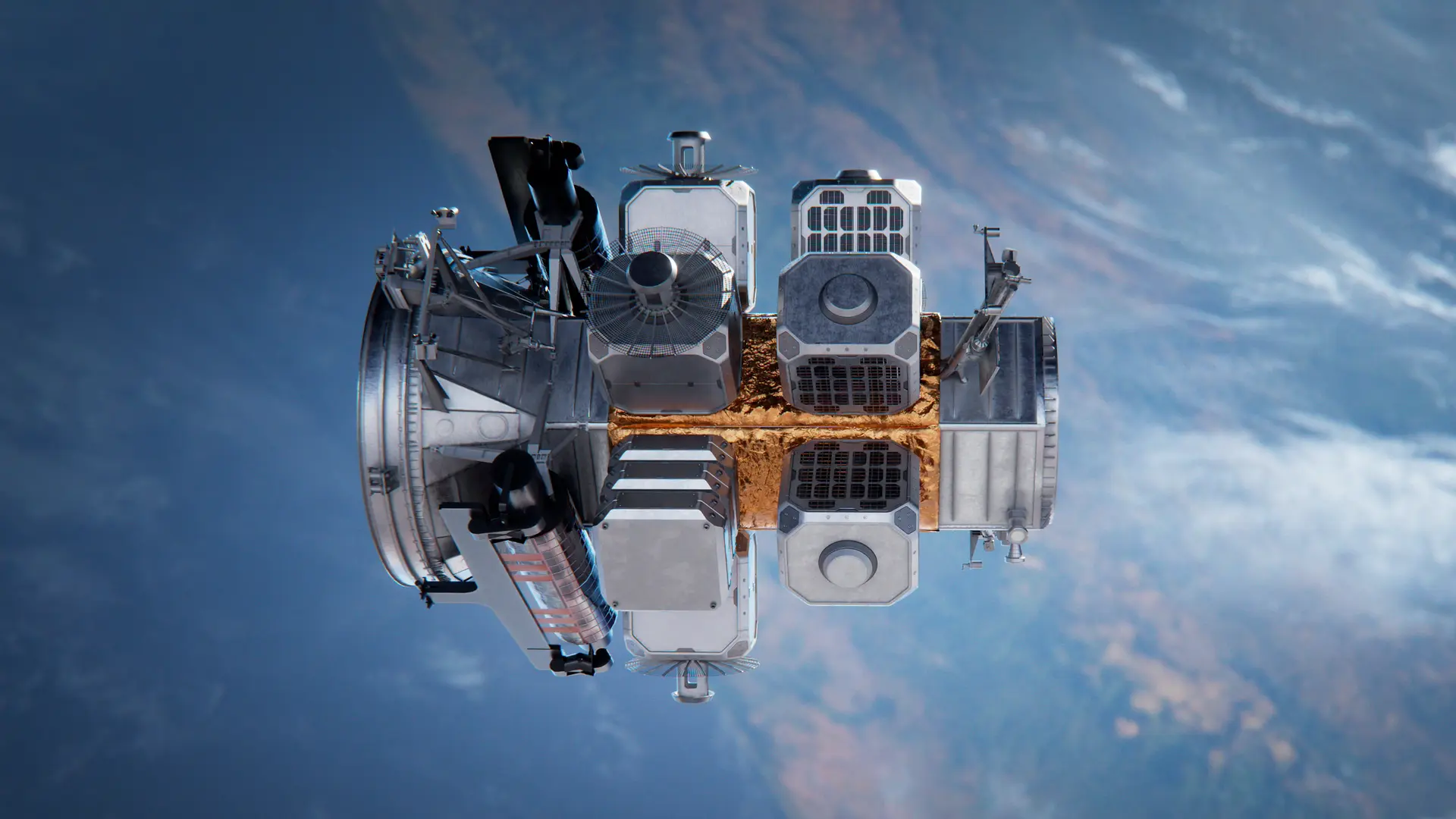
If an asteroid is too big, or moving too fast, to be effectively influenced by NEO Hunter’s ion beam, the spacecraft can enter a second mission phase called “Robust Kinetic Disruption.”