
|

Scientists Discover Bees Don’t “Dance Like No One’s Watching” – They Cater Their Moves To Their Audience
Want to see a bee’s best moves? You’ve got to earn it.

The “waggle dance” isn’t for amateurs.
Image credit: MeggedyannePhotography / Shutterstock.com
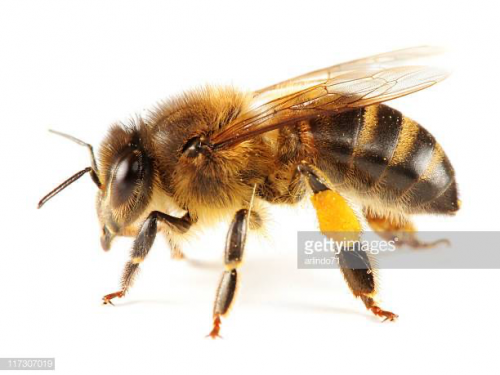
They say dance like no one’s watching – that is, unless you’re a bee. On their quest to decipher the complex “waggle dance”, scientists have discovered how these highly intelligent insects cater their dance moves to their audience. If only human wedding guests could learn to do the same…
Now, new research has discovered how the “audience effect” also influences a bee’s waggle dance performance.
“The waggle dance is often presented as a one-way information transfer,” said senior author Ken Tan at the Xishuangbanna Tropical Botanical Garden of the Chinese Academy of Sciences in a statement. “Our data show that feedback from the audience shapes the signal itself. In that sense, the dancer is not only sending information, but also responding to social conditions on the dance floor.”
The team’s initial observations revealed that a key deciding factor for a bee’s waggle dance performance was audience size. If a bee performed to a packed dancefloor, they made precise and reliable movements loaded with high-quality information.
If the dancefloor emptied and they only had a few spectators, the quality of that waggle dance seemed to fall off a cliff. The movements became fuzzy and imprecise, and the bees wandered all over the shop as if trying to draw in an audience.
So, Tan and colleagues put the audience effect to the test by using an aspirator to remove spectator bees while a bee was dancing (rude, but good science). They then tested two small audience types: non-foraging juveniles who didn’t pay attention, and a captive audience of adult bees watching their every movement.
It revealed that the quality snapped back when the bees were waggle dancing for fellow adult foragers, demonstrating that it’s not just the quantity but also the quality of an audience that influences a bee’s performance.
“Humans aren’t the only ones who perform differently depending on their audience,” added Lars Chittka, a researcher at Queen Mary University of London. “Our study shows that honey bees quite literally dance better when they know someone is watching.”
“When followers are scarce, dancers wander around searching for listeners — and in doing so, their signals become fuzzier. It’s a lovely reminder that even in the miniature world of insects, communication is a deeply social affair.”
Dance like no one’s watching? Forget that, bees live for the applause.
The study is published in the journal Proceedings of the National Academy of Sciences.





Leave A Comment