
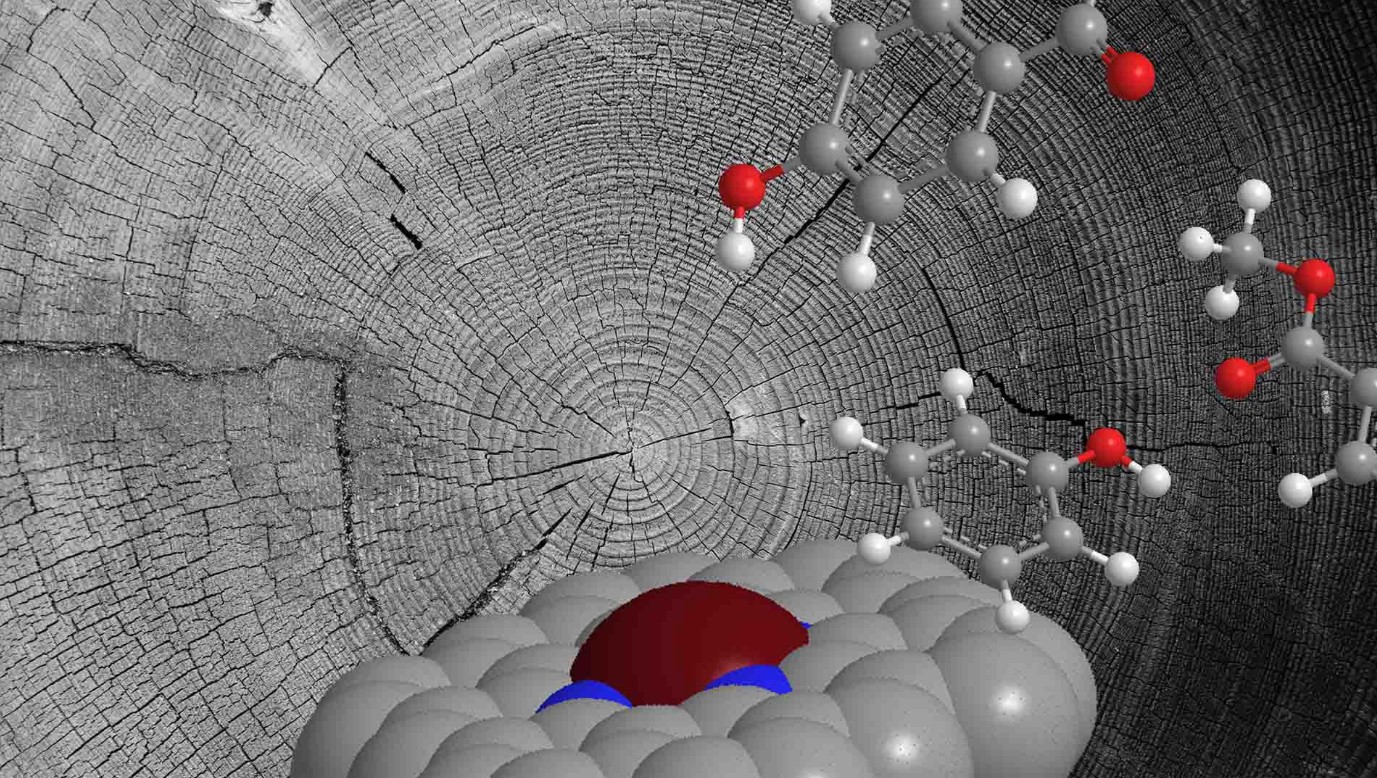
Atomic insight could make plant waste a more practical source of fuels, plastics and chemicals.
Every year, agriculture and forestry leave behind large amounts of plant material containing lignin, the substance that helps stems, wood, and other tissues remain rigid. Lignin can make up (up to 35%) of this discarded biomass and represents nature’s largest renewable supply of aromatic chemicals, which are carbon-based compounds built around stable ring structures.
That chemical stability is also the problem. Lignin consists of a tangled network of strong bonds that resists ordinary processing, making it difficult to turn this abundant material into useful products for sustainable manufacturing.
An international research group including Dr Christopher Parlett, Xinyue Zhou, and Yutao Jiang from the Department of Chemical Engineering developed a catalyst designed to overcome that barrier. Their work, reported in ACS Catalysis, not only demonstrated efficient lignin conversion but also identified the molecular machinery responsible for breaking its strongest bonds.
Under optimized conditions, the catalyst converted nearly all of the model lignin compounds used in the tests. It also generated high yields of valuable products, including phenol, an aromatic chemical used in the production of many materials.
The reaction worked under relatively mild conditions and did not require harsh chemical treatments. Reducing the need for extreme processing could lower energy use and waste in future manufacturing systems.
Model compounds provide a controlled way to study reaction chemistry, but actual lignin is much more complicated. To determine whether the catalyst could handle that complexity, the researchers tested lignin obtained from several biomass sources.
The catalyst successfully converted those real samples into useful aromatic compounds. Such molecules could eventually serve as starting materials for fuels, plastics, and other products now commonly manufactured from petroleum.