|


Genetic discovery could slash avocado breeding time by years



 Follow Earth on Google
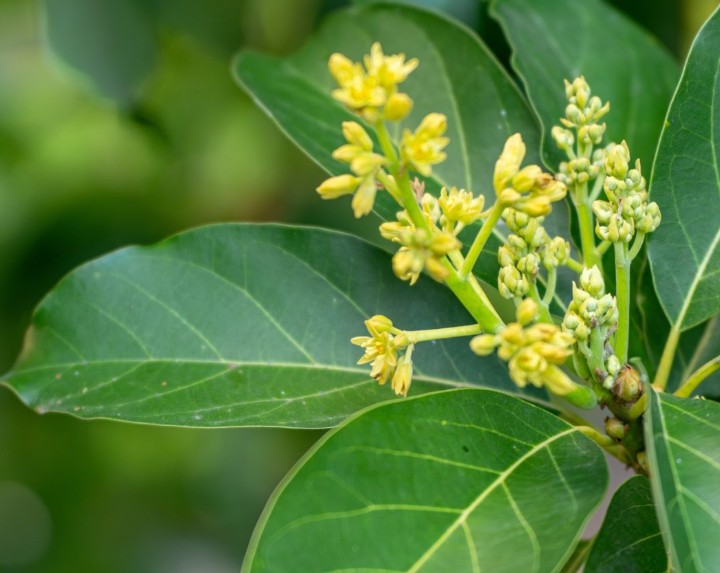
An avocado flower opens twice. It opens as a female flower one day, closes overnight, then reopens the next morning as a male.
Every tree keeps to one of two schedules. A-type trees turn female in the morning, then male by afternoon.

B-type trees do the opposite. Their male phase comes first, and the female phase follows later in the day.
Growers have sorted avocados into these two groups for about a century. Nobody knew what set a tree’s schedule.
A team led by the University of California, Davis (UC Davis) has now traced it to one gene. The peer-reviewed work relied on DNA sequencing, not on changing the gene in the lab.
Study lead author Jeffrey Groh ran the project as a doctoral student and now works at the University of California, Berkeley (UC Berkeley).
One gene controls flower type
The team sequenced the DNA of 374 trees grown at an orchard at the University of California, Riverside (UCR).
The researchers compared each tree’s DNA with its flower type and found the strongest genetic signal on chromosome 10.
The two parent trees were an A-type called Gem and a B-type called Luna. The trait followed simple inheritance, with a dominant version of the gene making A-type flowers.
That points to one gene, not many. The gene, named SDMYB, makes a protein that turns other genes on and off, and it works almost only in flowers.
Watching flowers all day
Before any DNA work, the team had to determine each tree’s type. That meant standing in the orchard and watching flowers open and close.
“We had to monitor the flowers hour by hour in the field to accurately determine whether each tree belonged to the A or B flowering group,” said Marllon Soares dos Santos, a postdoctoral researcher at UCR.
“Because flowering behavior changes throughout the day and is influenced by environmental conditions, we needed to observe the same trees repeatedly at different times.”
“We confirmed the flowering type of more than 500 individual trees, providing the phenotypic data needed for genetic analyses.”
How the gene works
The two versions of the gene differ in only a few places. Both A-type and B-type trees carry it, but the two versions become active at different times of day.
In A-type trees the dominant version turns on about two hours later. That delay matches the later change to the male phase.
“One allele of this gene is dominant, and it shows a unique pattern of temporal regulation that is closely linked to the difference in the timing of flowers opening and closing between A- and B-types,” said Groh.
The later activity fits the A-type’s delayed second opening. But the researchers noted that it does not explain the A-type’s earlier first opening, so timing alone does not fully explain the pattern.
Highly evolved and dynamic structures
The two forms of the gene are far older than the avocado itself. They appear in at least 26 wild relatives, with the split between them dating back about 42 million years.
“Our study provides a genetic explanation for a century-old mystery of avocado pollination,” Groh said.
“Flowers are not just static decorations; they are highly evolved and dynamic structures. We can see this in the pulsating rhythm of avocado flowers opening and closing throughout the day.”
“Through the power of genetics, we can detect traces of this rhythm far into the ancient past.”
Why both types survive
Neither type replaces the other, and there is a reason. Whichever type is rarer has an easier time finding a mate of the other kind.
The two flowering schedules encourage cross-pollination rather than self-pollination.
Growers plant both types together, with B-type trees often serving as pollinizers for prized A-type varieties such as Hass.
Among the offspring, about 85% and 88% traced back to a father of the other flower type. That advantage for rare types keeps both versions in the population over millions of years.
True cinnamon has a very similar daily rhythm, yet it does not use these same gene versions. This means that the same system evolved more than once.
Reading a seedling’s DNA
Avocado trees can take between five and 12 years to flower. Until now, breeders had to wait that long to learn a seedling’s type.
“This gives us a shortcut we’ve never had before,” said Eric Focht, a staff research associate at UCR.
“Instead of waiting years for a tree to flower, we can identify its flower type almost immediately using its DNA. That allows us to make much smarter breeding decisions.”
The next generation of avocados
“Our goal is to create avocados with outstanding fruit quality,” said Focht.
“Now we can intentionally focus on producing the flower types we need instead of leaving it to chance.”
Focht said that people had wondered about this trait since avocado breeding began in California.
He added that researchers now understand the genetics behind it and can use that knowledge to develop the next generation of avocados.
The study is published in the journal Proceedings of the National Academy of Sciences.