A study published in Nature Geoscience suggests that life on Earth could last for another 1.8 billion years, contrary to previous estimates that predicted a much shorter timeline due to increasing solar luminosity. The study used a new model to simulate the long-term evolution of Earth’s biosphere, taking into account factors such as climate, geology and biological processes. The findings indicate that the biosphere might adapt and survive longer than previously thought, although significant changes in the environment will pose challenges to future life forms.
Study suggests life on Earth has around 1.8 billion years left — but the biosphere might evolve to survive even longer
Using complex climate models, researchers have pinned down the point at which life will no longer be able to survive on Earth.
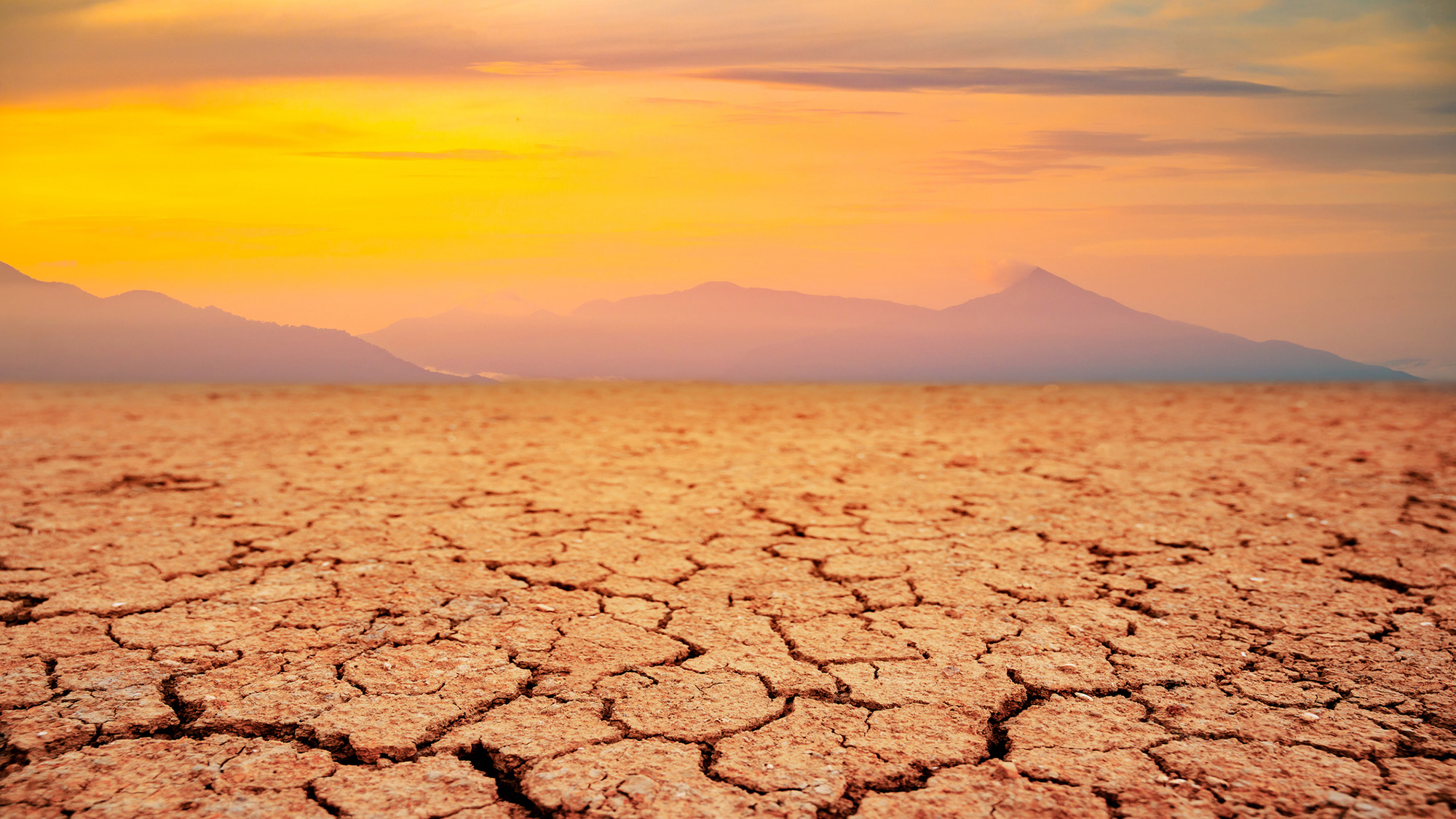
Scientists find life on Earth will eventually end around 1.8 billion years from now, when the sun gets brighter and our planet loses its oceans.
(Image credit: sarayut Thaneerat via Getty Images)
Life on Earth could continue for another 1.8 billion years, according to new research. This figure, which is based on complex climate models, is far longer than many previous studies indicated.
In the new study, published May 28 in the journal JGR Atmospheres, researchers suggest that plant life could continue about 1.8 billion years into the future. That nears the time when Earth would lose its oceans to space, either through radiation splitting water atoms or runaway evaporation, in about 2 billion years.
“We were trying to show that life on Earth — complex vegetation — could survive longer into the future than previous studies had shown,” study co-author Jacob Haqq-Misra, an astrobiologist at space exploration charity Blue Marble Space, told Live Science.
The boundaries of life
Life on Earth relies on photosynthesis, the process used by plants, algae and some bacteria to turn sunlight into energy. The mechanism chemically converts carbon dioxide and water into sugars and oxygen. It requires both CO2 and sunlight.
But at certain temperatures, plants’ photosynthetic machinery shuts down. Eventually, the sun will warm Earth to the point that plants are no longer able to photosynthesize, which would in turn cause entire food webs to collapse and all life to perish.
Another issue is that as the sun dies and it gets brighter, there will be less carbon dioxide in the atmosphere, effectively starving plants.
Plants turn sunlight into energy, but at certain temperatures this ability shuts down.
(Image credit: lamyai via Getty Images)
“The Earth has stayed pretty hospitable in terms of surface temperature for most of the last 4 billion years because it has a built-in thermostat” by storing CO2 in rocks and releasing it during volcanic eruptions, Robert Graham, a planetary science researcher at the University of Chicago, who was not involved in the research, told Live science.
When it is hotter, the planet pulls more carbon dioxide out of the atmosphere and stores it in rocks underground, Graham said. This offsets the warming to keep the temperature stable but means that the carbon dioxide isn’t accessible to plants.
Climate models and extreme plants
In the new study, Haqq-Misra and colleague Eric Wolf, a research scientist at Blue Marble Space, used 29 climate models to estimate what would happen to Earth’s vegetative biosphere under different scenarios. They used the two extreme cases as limits — when Earth is too hot for life but the CO2 was stable; and when there is not enough CO2, but the temperature was stable. They then looked at the range of CO2 and sunlight conditions in between those extremes. This enabled them to include situations in which Earth was very efficient at pulling carbon from the atmosphere when temperatures started rising.
They also included information about a variety of plants. Some plants can survive on a much lower ratio of atmospheric CO2 than others. The study included plants that have a special photosynthetic process (known as crassulacean acid metabolism), such as succulents and orchids. These plants can sustain themselves on relatively tiny amounts of CO2. The same is true of some marine plants, which can dissolve and access carbon in the ocean system.
Other experts were impressed by the findings.
“Haqq-Misra and Wolf have used a sophisticated 3D climate model to show that Earth’s climate may remain hospitable to plant life significantly longer into the future than predicted” by simpler models, said Graham, who authored one of those earlier studies. “It’s an advance over previous work and suggests that complex biospheres like that of Earth are more resilient to environmental change from stellar brightening than previously suggested.”
Looking to the future
Andrew Rushby, an astrobiologist at Birkbeck University of London who was not involved in the research, told Live Science that the paper updated the concept of the lifetime of the biosphere. However, he cautioned that the results remained “broad estimates.”
“It is not possible for us to predict or know the possible evolutionary adaptations that the photosynthetic biosphere may undergo in response to increasing solar output and lower [atmospheric CO2], especially over billions of years,” he said.
In their paper, the authors wrote that “limits posed by thermal stress or starvation may only reflect our observations of the biosphere today rather than hard limits on how the biosphere may evolve.” There is also no way of knowing how life might adapt to new circumstances.
Haqq-Misra said that he found the results comforting. “Earth’s system is resilient, and we are part of something that could have a much, much longer future,” he said.
The results could also help scientists figure out what the thresholds could be on other planets. “Part of the challenge is starting with these Earth-based models, and then generalizing the physics as much as possible to be able to simulate a wider range of atmospheres,” he said.
A study published in Nature Geoscience suggests that life on Earth could last for another 1.8 billion years, contrary to previous estimates that predicted a much shorter timeline due to increasing solar luminosity. The study used a new model to simulate the long-term evolution of Earth’s biosphere, taking into account factors such as climate, geology and biological processes. The findings indicate that the biosphere might adapt and survive longer than previously thought, although significant changes in the environment will pose challenges to future life forms.




Leave A Comment